 ไทย
ไทย












Please select an organization before paying zakat and making other donations. select an organization
No items in the cart.
Subtotal:0.00 THB
My Cart
Rulings on Zakat of Income and Salary

Zakat on Salaries and Wages (Zakat on Income and Salaries)
Context and Foundational Principles
During the era in which the Quran was revealed, salaries and wages were not a primary source of wealth. As a result, no specific instructions regarding this matter appear in the Sunnah (the prophetic tradition). However, the general Quranic commands concerning the purification of wealth are broad enough to encompass this modern form of income, as well as other contemporary forms. These include the following verses:
"O you who believe, spend from the good things you have earned" (Al-Baqarah: 267)
"Take from their wealth a charity to purify and cleanse them, and pray for them" (At-Tawbah: 103)
Classification of Salary (Al-Mal Al-Mustafad)
Most contemporary scholars classify salary as Al-Mal Al-Mustafad — meaning wealth that is newly acquired.
Sheikh Yusuf Al-Qaradawi explains that this term refers to wealth lawfully obtained through legitimate employment. In support of this classification, he cites a report from Ibn Umar, in which the Prophet is said to have stated: "Whoever receives income has no obligation to pay zakat on it until a full year has passed."
Historical Evidence and Early Practices
The payment of zakat on salaries finds justification in the practices of the early Muslim generations (the Salaf), which include:
- Companions of the Prophet (Sahabah): such as Ibn Abbas and Ibn Mas'ud
- Jurists: such as Az-Zuhri, Al-Awza'i, and Dawud Az-Zahiri
- Shia Imams: such as Al-Baqir and As-Sadiq
- Caliphs: such as Mu'awiyah and Umar ibn Abd al-Aziz
Notable historical examples include:
- Ibn Abbas stated: "Whoever receives income must pay zakat on the very day it is received."
- Ibn Mas'ud reportedly distributed salaries in small pouches, having already deducted zakat from them beforehand.
- Mu'awiyah and Umar ibn Abd al-Aziz are both reported to have collected zakat on salaries. Imam Malik further recorded that Mu'awiyah was the first ruler to formally institute the collection of zakat on salaries.
Scholarly Conclusions
Regarding Mu'awiyah's practice, Al-Qaradawi observed that had his actions as Caliph fallen outside the boundaries of Islamic law (Shari'ah), the Companions who were alive at the time would certainly have objected.
Drawing on this body of evidence, Al-Qaradawi concluded:
"For this reason, many great jurists of the past — including Az-Zuhri, Al-Hasan, Makhul, Ibn Hazm, Al-Awza'i, and Imam Ahmad — ruled that zakat on received income is due on the very day it is received."
Author's Remarks
Although no specific examples appear in classical jurisprudential texts, the general Quranic commands — "spend from the good things you have earned" and "take from their wealth to purify and cleanse them" — are sufficiently clear to establish that salaries constitute wealth subject to zakat calculation and payment.¹
Resolution of the First International Conference on Zakat
The First International Conference on Zakat, organised by Kuwait Zakat House in Kuwait City, was held on 29 Rajab 1404 AH, corresponding to 30 April 1984 CE. The resolution passed at this conference marked a significant turning point in the modern Muslim world, formally recognising income and salaries as zakatable wealth.²
Footnotes
¹ Sayed Sikandar Shah Haneef and Mek Wor Mahmud, Issues in Contemporary Zakah: A Juristic Analytical Evaluation (Kuala Lumpur: IIUM Press, 2011), pp. 92–93.
² Google Gemini, "Response regarding the resolution of the First International Conference on Zakat on income and salary zakat," Large Language Model, 3 December 2025.
You can calculate and pay income and salary Zakat via Zakat Thailand :
You can calculate and pay income and salary Zakat via Zakat Thailand :
Gallery
Related



Impacts Example
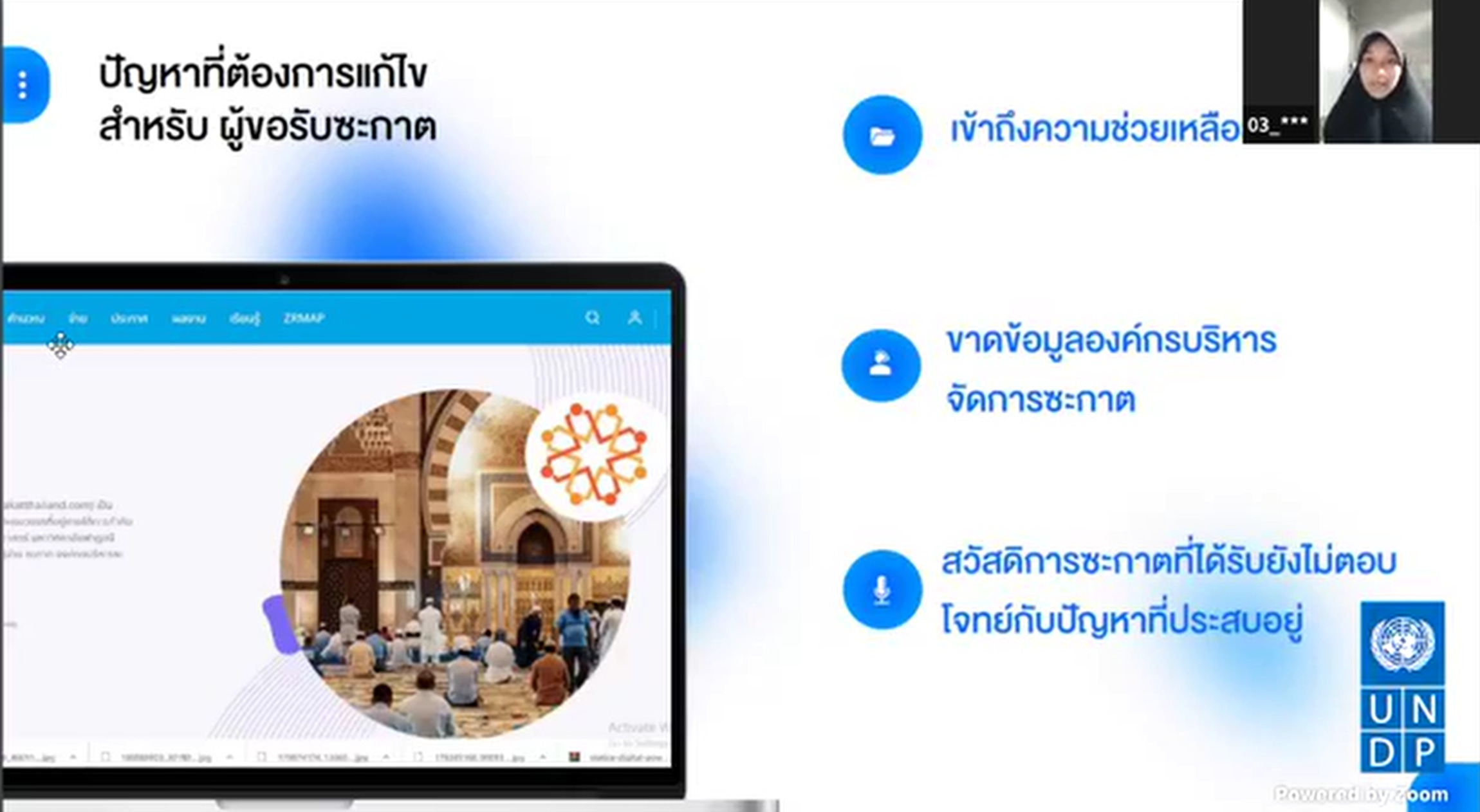
นำเสนอโครงการแพลตฟอร์มระบบซะกาตออนไลน์ครบวงจร รอบ 9 ทีม
By สัลมาน สะนิ
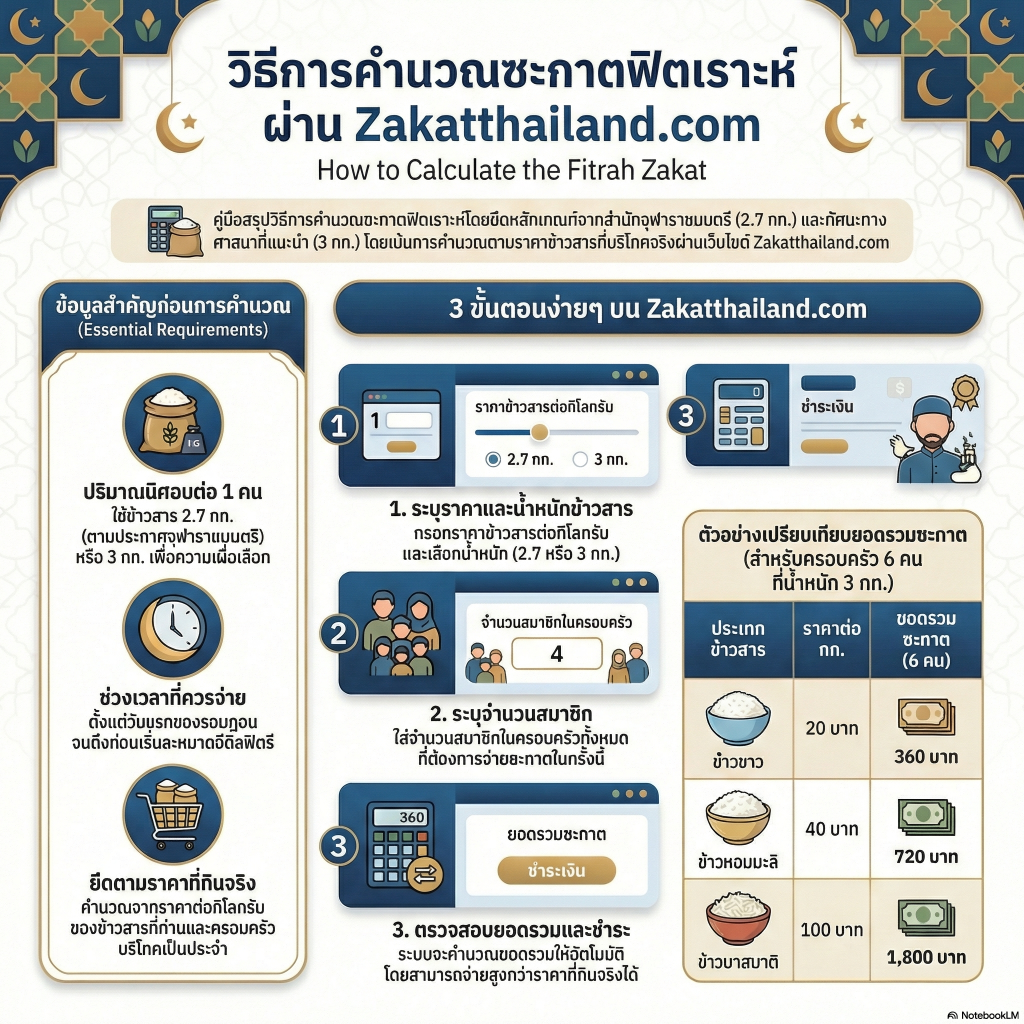
How to Calculate the Fitrah Zakat
By สัลมาน สะนิ


นำเสนอโครงการแพลตฟอร์มระบบซะกาตออนไลน์ครบวงจร รอบ 5 ทีม
By สัลมาน สะนิ

มอบทุนการศึกษาให้นักเรียนด้อยโอกาส 2567
By มูลนิธิอัลฮูดาเพื่อสังคม